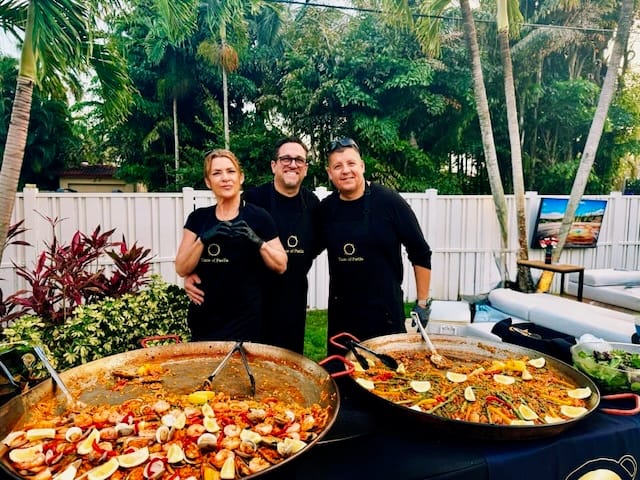
In My Humble Opinion, Seafood Paella is One of the Most Iconic Dishes of Spanish Gastronomy and a Culinary Benchmark on the Andalusian Coast Although its origin lies in the Valencian Community, its evolution and popularity have made this variant surpass the traditional recipe in recognition. In this article, we will explore its history, cultural impact, regional variations, and how it has adapted to international markets such as the United States.
Origin and History of Seafood Paella
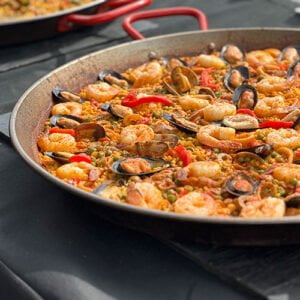
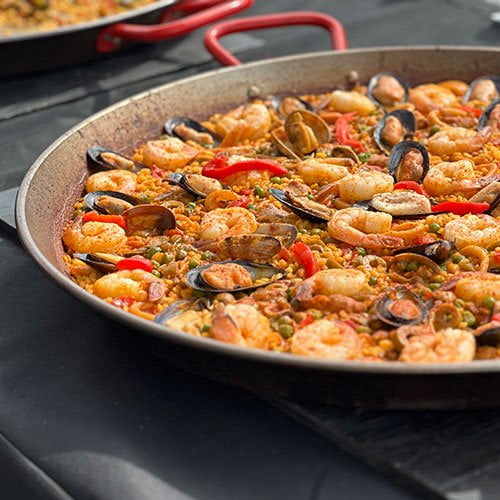
Paella was born in the Valencian countryside as a dish prepared by farmers who combined rice with rabbit, chicken, and some vegetables. However, in coastal areas, where seafood and fish were more accessible, meat was gradually replaced by ingredients from the sea, giving rise to seafood paella. This version became established in Andalusia due to the abundance of fresh Mediterranean and Atlantic products.
Starting in the 20th century, with the rise of mass tourism in Spain, seafood paella began to stand out as one of the most preferred options for visitors, often surpassing the traditional Valencian recipe. Its vibrant color, unmistakable aroma, and deep flavor turned it into the star dish of many coastal restaurants.
The Cultural Influence of Paella
Seafood paella is not just a dish; it is a symbol of togetherness and celebration. In Spain, paella represents family unity and friendship, as its preparation is usually done at social gatherings, outdoors, and in large quantities. Its ability to bring people together around the table has made it an emblem of Spanish gastronomic culture.
Internationally, seafood paella has been adopted as a reference dish in both haute cuisine and popular gastronomy. Its presence in festivals, restaurants, and culinary events has solidified its image as a representative dish of Spain, attracting the attention of chefs and food lovers worldwide.
Socially, seafood paella has influenced the identity of many coastal communities in Spain, reinforcing the link between cuisine and the sea. Its success in the tourism industry has turned its preparation into a gastronomic experience that goes beyond just eating. It has become a culinary spectacle where fire, rice, and seafood ingredients come together in a gastronomic ritual that defines the Mediterranean lifestyle.
The Evolution of Tourism on the Costa del Sol and Its Impact on Gastronomy
Since the 1950s, the Costa del Sol has become one of the main tourist destinations for Europeans and Americans. Its warm climate, beaches, and hotel infrastructure have attracted millions of visitors each year. During the 1960s and 1970s, the boom in British and German tourism consolidated the region as a vacation paradise, while in recent decades, luxury tourism has increased with the arrival of high-net-worth travelers, especially from Scandinavia and the Middle East.
Tourism growth has directly influenced local gastronomy. Restaurants and beach bars began to adapt their schedules and menus to meet the demand of foreign visitors while maintaining the essence of Spanish cuisine. Seafood paella became a flagship dish, as it perfectly represented the fusion of the sea and Andalusian culinary tradition.
Additionally, Spain’s late dining hours—where in June and July, the sun sets close to 10 p.m.—have surprised many tourists, who find it unusual to order paella so late at night in a restaurant. This phenomenon has influenced Spanish society, where late dinners have become the norm, shaping the country’s nightlife.
Factors Behind Its Popularity Over Valencian Paella
Although Valencian paella remains the officially recognized version, seafood paella has gained greater popularity for several reasons:
•Greater international appeal: Seafood is more attractive to tourists and foreigners than rabbit meat or “garrofón” beans.
•Simplicity and elegance: Seafood paella is associated with special occasions and often has a more visually striking presentation.
•Tourism influence: The Andalusian coast has played a key role in expanding this variant, thanks to its connection to the sea and the rise of gastronomic tourism.
•Adaptability: Seafood paella allows for more variations and adaptations compared to Valencian paella, which has stricter preparation rules.
The Importance of Choosing the Best Rice
To achieve an authentic paella, selecting the right rice is crucial. In Spain, different varieties have Protected Designation of Origin (PDO) status, ensuring their quality and suitability for paella. The most notable varieties include:
•Valencian Rice (PDO): Includes varieties such as Senia, Bomba, and Albufera, known for their ability to absorb flavors while maintaining a firm texture.
•Ebro Delta Rice (PDO): Grown in Catalonia, this grain is ideal for seafood paella due to its resistance to overcooking.
•Calasparra Rice (PDO): A short, highly absorbent grain, making it an excellent choice for brothy dishes and paellas in dry climates.
Regional Variations of Seafood Paella
Within Spain, each region has contributed its unique touch to seafood paella. Some of the most representative recipes include:
•Málaga-style seafood paella: Features local fine clams and native shellfish, along with a rich rockfish broth.
•Cádiz-style paella: In Cádiz, fish such as “urta” or sea bream are added, combined with Atlantic shellfish.
•Almería-style paella: Distinguished by the incorporation of octopus and New Zealand mussels, taking advantage of local seafood products.
Atmospheric Pressure and Its Influence on Paella Cooking
One of the lesser-known but fundamental aspects of preparing a good paella is the influence of atmospheric pressure on broth evaporation. Experienced chefs know that:
•In high-pressure conditions or on hot and dry days, the broth evaporates more quickly, so a greater amount should be added at the beginning.
•In humid environments or low-pressure conditions, evaporation is slower, requiring adjustments to the liquid to prevent overcooked rice.
•At high altitudes, where the boiling point of water is lower, slightly more broth is needed to compensate.
These factors make the chef’s experience essential for calculating the exact amount of broth and achieving the perfect rice texture.
Taste of Paella and Its Adaptation to the U.S. Market
Taste of Paella has successfully preserved the essence of seafood paella in the U.S. market, staying true to traditional flavors while using local ingredients. Thanks to paella’s versatility, products have been adapted without altering the authenticity of the dish, allowing more people to enjoy this culinary gem without needing to travel to Spain.
Conclusion
Seafood paella continues to win over palates and hearts worldwide, solidifying itself as an emblem of Spanish cuisine.